
What Is Smart Glass? Technology for Smarter Homes and Offices
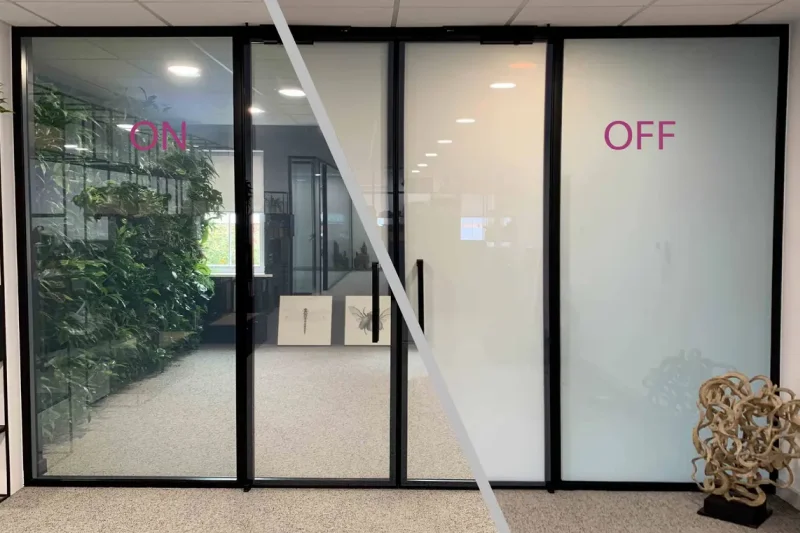
Different types of smart glass are transforming how we manage privacy, light, and energy in modern spaces. With the right technology, this new material can change from clear to opaque with only a touch, a remote, or even by itself. Smart glass is a stylish replacement for regular curtains and blinds in homes and businesses. It makes things more comfortable, cuts down on glare, and helps keep the temperature stable—all while giving your space a high-tech look.
Getting Started with Smart Glass: The Simple Breakdown
What is smart glass? It’s a high-tech material that can change its appearance on demand. Also known as switchable or privacy glass, it changes its look when it gets power, heat, or light. Electrochromic, SPD (suspended particle device), and PDLC (polymer-dispersed liquid crystal) are the most popular technologies. Each kind determines how much light gets through the glass and how clear it looks.
When electricity is supplied, electrochromic glass gently changes color. SPD glass changes color right away, going from dark to clear. PDLC glass may be frosted or transparent, making it perfect for seclusion when you need it. Panels, windows, and partitions are all available, and they may be built into walls, doors, or facades with very little wiring.
How Smart Glass Works in Real-Life Spaces
Smart glass technology may be used in windows, doors, fences, and skylights to adjust the tint or visibility right away. People commonly put it in their bathrooms, sleeping areas, or on the outside of their homes to manage light and privacy. In offices, it takes the place of shutters in conference rooms or executive areas, giving people privacy without blocking off natural light.
Types of Smart Glass You’ll Find Today
There are multiple kinds of smart glass, and each one is made with a distinct sort of technology and serves a different function. Some turn on their own, while others need power. All of them add versatility and a modern look to homes and businesses.
The smart glass definition refers to glass that can change its optical characteristics—such as transparency or color—in response to outside stimuli like heat, light, or electricity
Electrochromic Smart Glass
This kind features a thin electrochromic layer that changes color or hue when a voltage is used. It gets darker with time and is most typically used to block sunlight in windows or skylights. Electrochromic glass saves energy, but it might take anywhere from a few seconds to a few minutes to change, depending on the size and kind of glass.
PDLC Smart Glass
When you deliver electricity to PDLC (polymer-dispersed liquid crystal) glass, the liquid crystals line up, making the glass clear. When you switch it off, it gets frosted, which keeps light from coming through but blocks views. It’s great for places where you want to be alone, including conference rooms, bathrooms, or medical offices. PDLC works right away and is one of the most popular types of smart glass.


SPD Smart Glass
The name SPD stands for “suspended particle device.” There are tiny particles floating in the liquid in this glass. When the electricity is on, the particles line up and let light through. When the power is out, they scatter and make the glass darker. SPD glass changes state fast, making it perfect for protecting cars, houses, and businesses from the sun. It protects against UV rays quite well and lets you choose the hue.
Thermochromic Smart Glass
Thermochromic glass changes color when it becomes hot, not when it gets electric. The glass gets darker as the temperature goes up to block heat and glare. It doesn’t need any wiring or switches; therefore, it’s passive. It is often used in skylights and facades to control solar gain and keep the inside comfortable.
Among smart glass features, thermochromic technology stands out for being fully automatic and energy-free, adjusting to sunlight without any user input.

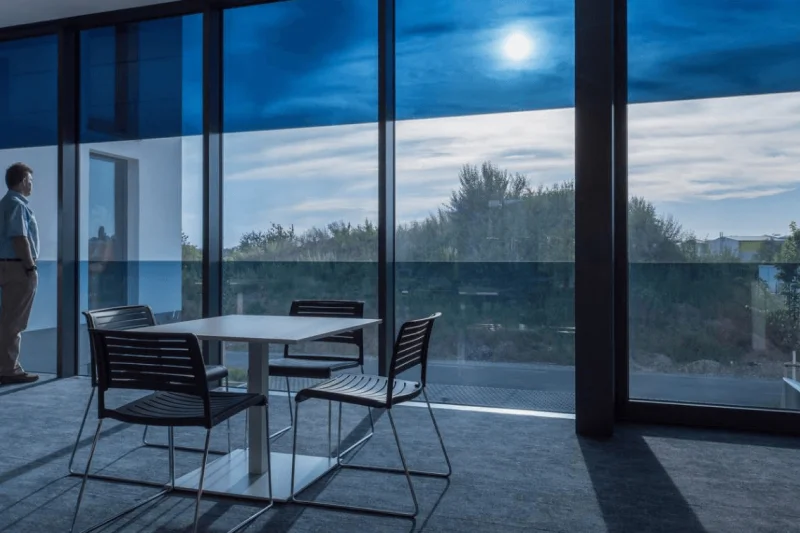
Photochromic Smart Glass
Like transition lenses in spectacles, photochromic smart glass changes color as it is exposed to sunlight. It gets darker when UV light hits it and clearer when the light goes away. It’s great for places where you want to regulate the light automatically without using electricity. This kind is typically used in windows or decorative panels and works well in areas with constant sunlight.
What Is Smart Glass Used For? Everyday Applications
Smart glass technology may help you keep your privacy, adjust heat and light, reduce glare, and save energy. It takes the role of curtains or blinds in houses, letting in light while obscuring views from the outside. It also helps keep the temperature inside stable, which lowers the expense of air conditioning.
Smart glass makes it easier for people to work and stay focused in offices by making conference rooms and personal offices private instantly. Hotels and spas utilize it to make restrooms and walls seem sleek and modern while still giving guests some privacy. Hospitals use it to lower the danger of cross-contamination, so you don’t have to touch curtains or blinds. Some cars and planes even utilize smart glass to block out light and make passengers more comfortable.
Controlling Smart Glass: Buttons, Apps, or Voice
Depending on the smart glass technology, there are several ways to operate it. A wall switch or remote control is the easiest choice. One press makes the glass transparent or frosted. For more complex configurations, mobile apps enable users to modify settings or manually alter the tint levels from their phones or tablets.
Voice control is also becoming more common. Switchable glass may respond to voice instructions like “make window private” or “dim the glass” when it is connected to smart home systems like Alexa, Google Assistant, or Apple HomeKit. In business establishments, occupancy sensors or illumination levels can be used to automate smart glass, changing it based on what is needed at the moment.
Smart Glass vs Traditional Windows
Curtains, screens, or colored glass on traditional windows control the amount of light and privacy. These options do the job, but they need to be set up manually and take up room. Smart glass, on the other hand, has control built in and doesn’t need any extra layers. It just has one glass panel that can be changed as needed.
Wondering what can smart glass do? It may change from clear to obscure in a matter of seconds, react to sunshine, or work with smart systems. It also makes energy use more efficient by lowering heat absorption and UV exposure without shutting out daylight.
Smart glass costs more up front, but it saves money in the long run by lowering cooling expenses and reducing the need for cleaning or fabric replacement. It’s a cleaner, more flexible option for modern settings.
Do you want something special?
Contact us if you want to add more light to your home or business and are trying to find the most trustworthy glass manufacturers in your area
Get a free consultation
Is Smart Glass Worth It? Costs vs. Benefits Breakdown
As we said, smart glass is more expensive than ordinary windows, especially when you use high-tech features like PDLC or SPD. Wiring and occasionally connecting to smart systems are also needed for installation. But the long-term return is typically more than the initial cost, especially in high-end houses, workplaces, or structures that care about energy use.
Benefits of smart glass:
- Instant privacy without blinds or curtains
- Reduced cooling costs thanks to heat control
- More natural light without glare
- Modern, minimalist look
- Increased property value
- Hands-free automation via app or voice
Smart glass costs more up front than regular glass, but it saves money on heating and cooling expenses, gets rid of the need for shading systems, and makes you more comfortable every day. Smart glass might be a good investment for households or companies that value privacy, conserving energy, or high-tech features.
What Are the Disadvantages of Smart Glass?
Even while the benefits of smart glass are numerous, it isn’t flawless. The high initial cost is one of the biggest problems. The glass itself costs a lot, and putting it in place sometimes needs hiring a professional to do the wiring and maybe integrate it with other systems, which adds to the total cost.
Smart glass also has several problems that rely on the technology. To understand the risks, it helps to know what is smart glass and how it works. For instance, electrochromic glass changes color slowly and cannot provide you with full privacy. In some lighting circumstances, PDLC gets frosted but doesn’t completely limit the view. Some varieties, like thermochromic or photochromic, can’t be managed by hand and need heat or sunshine to work, which might be a problem.
Among smart glass features are responsiveness to external conditions, integration with smart systems, and the ability to switch modes instantly—but these can also create points of failure. Another issue is how long it will last. The glass is usually sturdy, but the inner layers and circuitry might wear out with time, especially if you exchange them often if they are made poorly. Repairs can be expensive, and replacing them isn’t as easy as it is with regular glass.
If smart glass isn’t made right, it may mess with Wi-Fi or radio signals in some circumstances. And lastly, smart systems can always go down, whether it’s because of power problems, app bugs, or problems with interoperability.
Can You See Through Smart Glass?
Yes, but only when it is clear. Smart glass can become frosted, tinted, or dark when turned off or set to privacy mode, depending on the kind. This blocks the view but still lets in light. In private mode, you can’t see properly through it.
To put it simply, smart glass meaning involves the fact that it can actively change its transparency to control visibility and light—perfect for on-demand privacy.
Why Smart Glass Could Be Your Next Big Upgrade
Smart glass is a modern, stylish method to control light, privacy, and energy all in one material. It takes the place of heavy drapes, works right away, and integrates nicely into smart home systems. Smart glass delivers long-term value, whether you want to be more comfortable, have a superior design, or pay less for energy. It’s a useful update for homes and offices that combines utility with new ideas.
FAQ
What is smart glass technology?
Smart glass technology lets glass alter its look, generally from clear to frosted or colored, depending on heat, light, or electricity.
How is smart glass made?
It is manufactured by putting specific materials, such as liquid crystals or electrochromic coatings, between glass panels and then sealing them and attaching them to a power source.
What can smart glass do?
Smart glass can change from clear to private mode, block UV rays, cut down on glare, manage heat, and even link to smart home devices so you can use your voice or an app to operate it. It may be found in automobiles, windows, skylights, and even toilets and conference spaces.
Is smart glass energy-efficient?
Yes, it helps save cooling expenses by keeping heat and sunshine out. This makes it a good choice for both homes and business buildings.
Order Any Glass From Industrial Glass Laminating LLC
Industrial Glass Laminating LLC is the best New York glass company to discover perfect items. To satisfy every need and give first-rate service from start to finish, we provide a range of necessary possibilities and more! Contact us if you want to add more light to your home or business and are trying to find the most trustworthy glass manufacturers in your area.