
Different Types of Mirrors and Where Each One Works Best
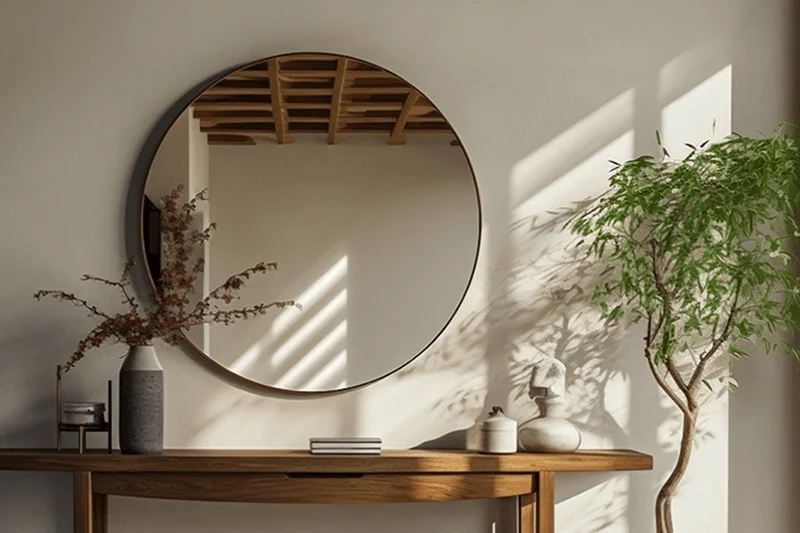
There are more different types of mirrors than most people stop to consider — and the right choice depends on a lot more than size and shape. Whether you’re fitting out a bathroom, designing a retail floor, or choosing something for a hallway wall, knowing what’s available makes the decision much easier.
Different Types of Mirrors at a Glance
Types of mirrors generally fall into two broad categories: optical types, defined by how they reflect light, and design or functional types, which describe how and where they’re used in real spaces.
All types of mirrors you’d find in a showroom or glass fabricator’s catalog belong to the second category — wall mirrors, vanity mirrors, beveled mirrors, tinted glass, smart mirrors. But the optical side is worth a quick look because it explains why some mirrors distort and others don’t.
The Three Main Types of Mirrors and How They Reflect Light
So how many types of mirrors are there at the fundamental optical level? Three: plane, concave, and convex. Everything else is a design or application variation built on these.
Concave mirrors
A concave mirror curves inward, like the inside of a bowl, converging light toward a focal point. Objects placed close to the surface appear magnified, which is why makeup and shaving mirrors use this geometry. Outside personal grooming, concave mirrors appear in telescopes, headlights, and medical equipment.


Convex mirrors
A convex mirror curves outward, diverging light and producing a smaller but wide-angle reflection. You can see more of a room in a convex mirror than in a flat one of the same size. This makes them useful for safety and surveillance — parking garages, retail security, blind-corner road mirrors — and also as decorative interior pieces that create a sense of expanded space.
Mirror Types You'll Actually See in Homes and Commercial Interiors
These are the kinds of mirror you’d specify for a real project or browse in a store.
Wall mirrors
Wall mirrors cover the widest range — any mirror designed to mount on a vertical surface. They go from small accent pieces to oversized panels covering an entire wall. Scale has the biggest visual impact: a well-placed, generously sized wall mirror can transform a room’s perceived proportions in a way that smaller pieces can’t.
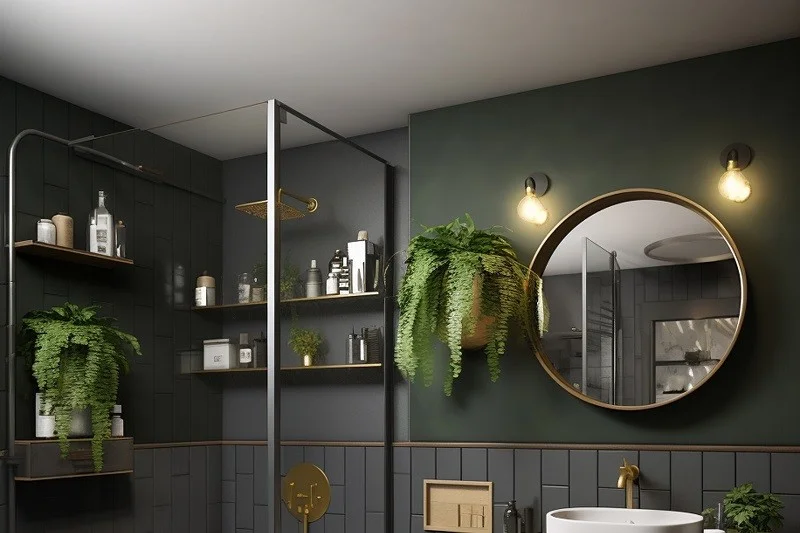
Bathroom and vanity mirrors
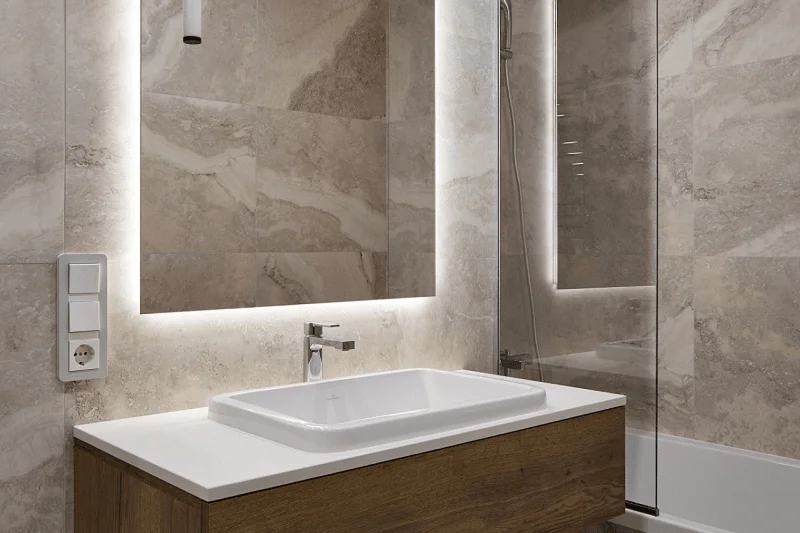
Bathroom mirrors have specific requirements: moisture resistance, compatibility with task lighting, and sizing that works with the vanity beneath. Many include integrated LED strips, built-in defoggers, or backlit frames. Tabletop vanity mirrors often combine a flat surface on one side with a magnifying concave surface on the other.
Full-length mirrors
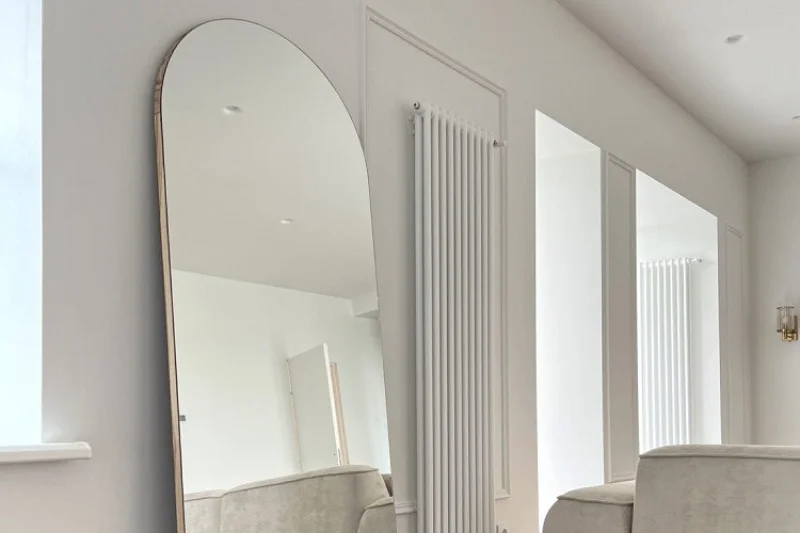
A full-length mirror is tall enough to show a complete head-to-toe reflection — typically at least 48 to 60 inches high. Available as freestanding leaners, wall-mounted panels, or built-in wardrobe doors, they’re among the most practically useful types of mirrors in bedrooms and dressing rooms, and standard in retail fitting rooms and hotels.
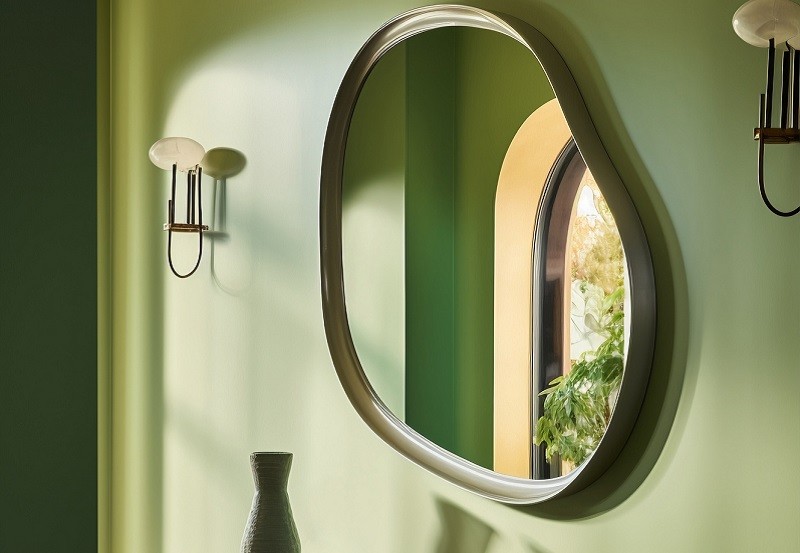
Decorative and framed mirrors
The frame turns a mirror into a piece of furniture. Carved wood, brushed metal, reclaimed timber, cast resin — the frame can carry as much visual weight as the reflective surface. In living rooms and entryways, a framed mirror functions as wall art that also reflects the room.
Specialty Mirror Types Worth Knowing About
Beyond the standard categories, there are kinds of mirror that serve specific design or functional purposes.
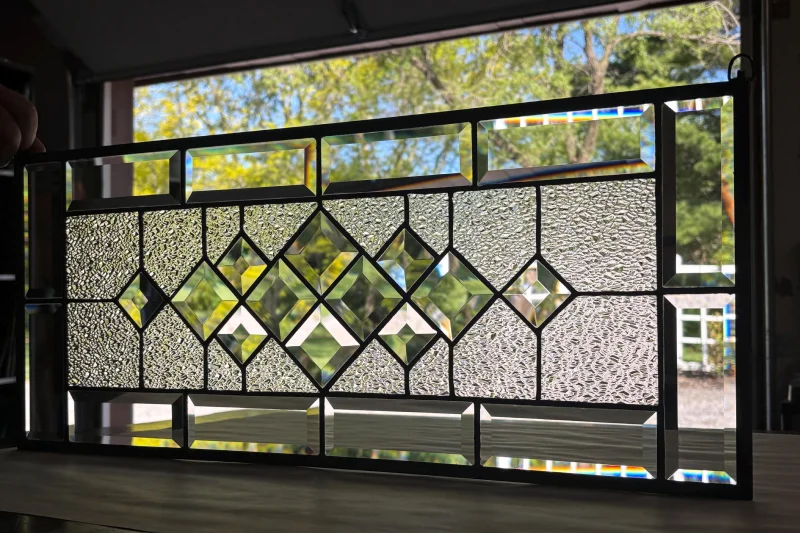
Beveled mirrors
A beveled mirror has its edges ground and polished at an angle, creating a sloped border around the flat center. The bevel catches and refracts light differently from the main surface, adding a refined, faceted quality. Beveled mirrors tend to read as more premium than plain flat-edged pieces — a common choice in traditional and transitional interiors.
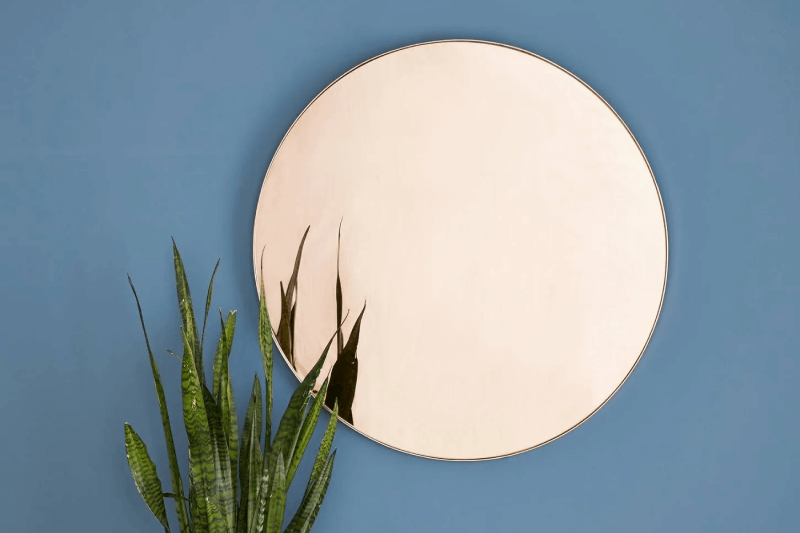
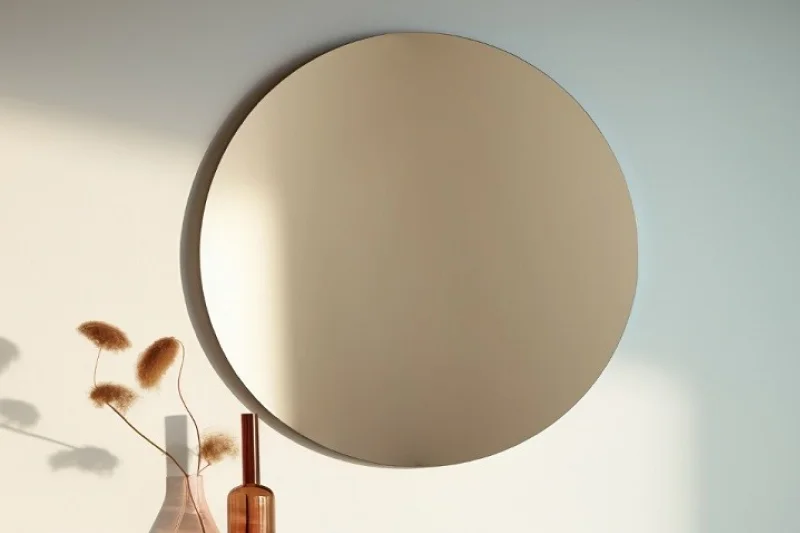
Tinted and colored mirrors
Tinted mirrors have a colored coating applied to the reflective surface — bronze, grey, smoke, and gold are the most common. They still function as mirrors but cast a warmer or cooler tone over the reflection. Bronze and gold-tinted options are especially popular in hospitality and high-end residential settings.
Antique-style mirrors
These are modern mirrors produced to look aged — uneven silvering, soft foxing effects, a smoky or mottled patina. The reflection is softer than standard glass, which suits rustic, industrial, and eclectic interiors. Not ideal for precision grooming, but a strong decorative statement.
Smart mirrors and two-way mirrors
Smart mirrors layer a display behind the glass — showing time, weather, or custom content — while functioning as a standard mirror when the display is off. Two-way mirrors appear reflective from one side and transparent from the other depending on lighting conditions, used in observation rooms, broadcast studios, and some retail contexts.
Do you want something special?
Contact us if you want to add more light to your home or business and are trying to find the most trustworthy glass manufacturers in your area
Get a free consultation
What Different Mirror Types Are Best For
Mirrors for making a room look bigger
Large flat plane mirror panels — especially wall-spanning installations — are the most effective tool here. Convex mirrors also widen the apparent field of view, though the effect differs in character. What the mirror reflects matters too: one facing a window does more for a space than one facing a blank wall.
Mirrors for bathrooms and humid rooms
Not all types of mirrors perform well in humid environments. Look for mirrors with sealed edges, protected silvering, and moisture-resistant backing. Frameless options with polished edges tend to outlast wood-framed pieces, which can warp or stain with prolonged humidity exposure.
Mirrors for entryways, bedrooms, and living rooms
This is where different kinds of mirrors open up stylistically. Entryways suit something tall enough for a full-length check. Bedrooms need an accessible full-length mirror. Living rooms are where decorative framed mirrors, convex accent pieces, tinted glass, and antique-style options tend to show up — function matters less, aesthetic more.
Mirrors for retail, offices, and custom interiors
A mirror for commercial interior use comes with different priorities: durability, larger size availability, safety-backed glass, and often non-standard dimensions. Retail fitting rooms use full-length flat mirrors with good vertical lighting. Office lobbies and hospitality spaces frequently specify large custom panels or tinted mirrors.
Framed vs Frameless Mirrors
The framed vs frameless mirror decision is partly a style call, partly practical. Framed mirrors are easier to hang, look warmer and more decorative, and suit traditional or transitional spaces. Frameless mirrors read cleaner and more contemporary, integrate better into minimalist interiors, and work well in tiled bathrooms where a frame would visually compete with the wall surface. The room’s style and the mirror’s role in it should drive the decision.
How to Choose Between Different Types of Mirrors
Start with the room and the purpose
Before thinking about style, clarify the function. A gym mirror, a bathroom mirror, a hotel lobby mirror, and a child’s bedroom mirror have genuinely different requirements. Start with use case, then layer in aesthetics.
Think about size, shape, and placement
Among all kinds of mirrors, size has the biggest impact on a room. Undersized mirrors look tentative; the right scale changes how a space reads. Round mirrors soften angular rooms; rectangular ones add structure. And what the mirror reflects matters — facing a window does more than facing a dark wall.
Don't overlook edge finish and customization
The edge of a mirror — raw cut, flat-polished, beveled, or framed — affects both the look and longevity of the piece. For custom mirrors in commercial or high-spec residential projects, edge finish should be specified as carefully as the glass type. Flat-polished edges are clean and safe; beveled edges add detail; raw cut edges only work where the edge won’t be seen or touched.
Key Takeaways on Different Types of Mirrors
Here’s a summary of what matters when navigating types of mirrors:
- The three optical types of mirrors — plane, concave, convex — determine how light reflects and whether the image is accurate, magnified, or wide-angle
- For interiors and commercial spaces, the flat plane mirror is the default; everything else is a purposeful variation
- All types of mirrors divide broadly into optical and design/functional categories — most real buying decisions live in the second
- Beveled, tinted, antique-style, and smart mirrors add aesthetic or functional value beyond standard flat glass
- The framed vs frameless mirror choice depends on style and context — neither wins universally
- For commercial and large-format projects, custom mirrors and safety-backed glass are worth specifying from the start
FAQ
What are the main different types of mirrors?
The three optical types are plane, concave, and convex. In practical interior use, the main categories are wall mirrors, bathroom and vanity mirrors, full-length mirrors, decorative framed mirrors, and specialty types like beveled, tinted, and smart mirrors.
What is the difference between plane, concave, and convex mirrors?
A plane mirror is flat and gives an accurate reflection; a concave mirror curves inward and magnifies; a convex mirror curves outward and gives a smaller but wider field of view.
What type of mirror is best for a bathroom?
A flat plane mirror with moisture-resistant backing, sealed edges, and protected silvering is the standard recommendation. Built-in LED lighting and anti-fog coating are worth considering for daily-use vanity mirrors.
Do beveled mirrors look more expensive?
Generally yes, the angled polished edge catches light in a way that adds visible refinement. It’s a modest upgrade that tends to elevate the overall look without dramatically changing the cost.
Are frameless mirrors better for modern interiors?
They tend to fit better in minimalist and contemporary spaces since there’s no frame competing with clean surfaces or tile. In a traditionally styled room, however, a frameless mirror can look unfinished.
Can I order a mirror in a custom size or shape?
Yes, glass fabricators routinely produce custom mirrors to specified dimensions, shapes, and edge finishes, which is standard practice for commercial projects and high-spec residential builds.
Order Any Glass From Industrial Glass Laminating LLC
Industrial Glass Laminating LLC is the best New York glass company to discover perfect items. To satisfy every need and give first-rate service from start to finish, we provide a range of necessary possibilities and more! Contact us if you want to add more light to your home or business and are trying to find the most trustworthy glass manufacturers in your area.